Flag Defense: The Art of the Pull and the Angles That Stop Drives
Flag football defense gets treated as the waiting-your-turn side of the ball — until the team that can’t pull flags loses by forty. Defense is its own craft: the pull technique, the coverage discipline and the angles that let ordinary speed make extraordinary stops.

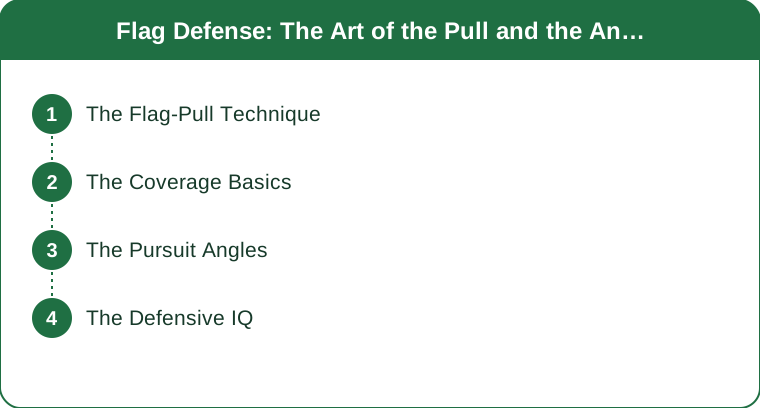
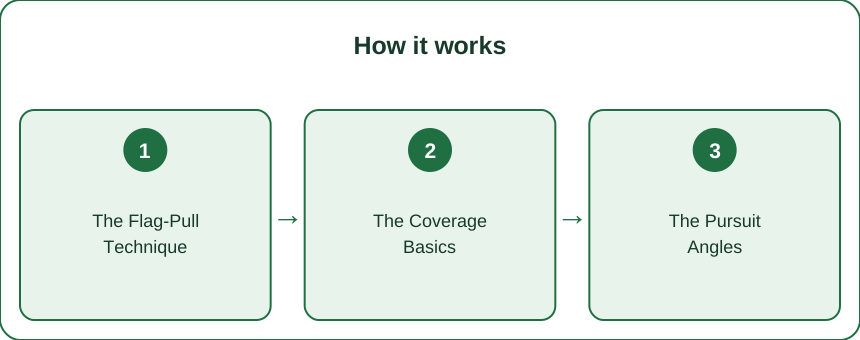
The Flag-Pull Technique
The tackle that isn’t: the approach mechanics (break down into short choppy steps as you close — the full-speed lunge is the missed pull’s origin story; balance beats velocity in the final two meters), the eyes-on-hips rule (ball carriers fake with feet, shoulders and eyes — hips don’t lie; the defender watching hips doesn’t bite on the spin move), the pull execution (attack the FLAG, not the body — hand low, snatch down-and-away, and show the pulled flag high per the universal etiquette), and the swarm doctrine (the first defender breaks down and contains, the second pulls — team pursuit forgives individual misses; the hero-pull attempt that misses springs the touchdown).
The Coverage Basics
Defending the pass: the cushion concept (start with a yard-plus buffer on your receiver — the separation math in reverse; getting beat deep costs six, getting beat short costs four yards), the hip-turn skill (when the receiver breaks, flip your hips and run — the backpedal-forever defender loses every deep route; the turn-and-run is defense’s one athletic non-negotiable, drillable solo), the zone-vs-match basics (zone defenders guard SPACE and pass receivers off — the talking defense; the silent zone is just five people in man coverage with extra confusion), and the ball skills (the peek at the QB when your receiver settles — the interception lives in the throw you saw coming; but the peek that lasts too long is the touchdown you didn’t).

The Pursuit Angles
Geometry as speed: the angle principle (chase the spot where the runner WILL be, not where she is — the intercept course that lets slower defenders make plays; the straight-line chase from behind is a footrace you already lost), the sideline ally (the boundary is the twelfth defender — force runners toward it and the field shrinks; the containment defender’s whole job is making the sideline do the work), the leverage discipline (defenders hold their assigned side — the rush that abandons its lane opens the cutback; the defense is a net, and nets need every knot), and the effort truth (pursuit is the great equalizer — the defender who runs to every whistle erases her own mistakes and everyone else’s; flag defense is one-third technique, two-thirds want-to).
The Defensive IQ
The chess side: the tendency reads (the offense that runs left on first down will run left on first down — rec-league offenses have three plays; count them), the rusher’s craft (where rushing is legal, the count-and-burst timing plus the hands-up finish — the tipped pass is the rush’s most common victory), the down-and-distance logic (third-and-long defends the sticks, not the checkdown — give the short one, swarm the catch, force the punt), and the celebration culture (defense runs on juice — the flag held high, the sideline noise for a stop; the defensive series that FEELS like offense is the rec-league momentum machine). Pull clean, chase smart, talk always: defense wins the games nobody highlights.
Break down before the pull, watch hips not eyes, take intercept angles, force the sideline. Flag defense is craft plus effort — and the team that pulls flags picks the score.
Keep Reading
This article is for general informational and styling purposes only. Fit, sizing, and product availability may vary.