Flag Football in August Heat: How to Play Well When It Is 90 Degrees
Quick Answer: Flag football is sneaky-brutal in heat because it is repeated sprints with short rests - exactly the effort pattern that spikes core temperature fastest. The management plan starts the day before: pre-hydrate with electrolytes, not just water. On game day: arrive cool, budget your all-out efforts, substitute honestly before you fade rather than after, use every between-series minute for shade and cold water on wrists and neck, and dress for turf that runs 20 to 40 degrees hotter than the air. Evening kickoffs help less than people think - the humidity peak and stored ground heat are both waiting for you.
The league schedule says fall season. The weather says deep August. The first two weeks of every fall flag season are played in summer conditions, and they are reliably where the pulled hamstrings, the third-quarter fades, and the worst decisions happen. The players who look fresh in week one did not get lucky - they managed something specific.
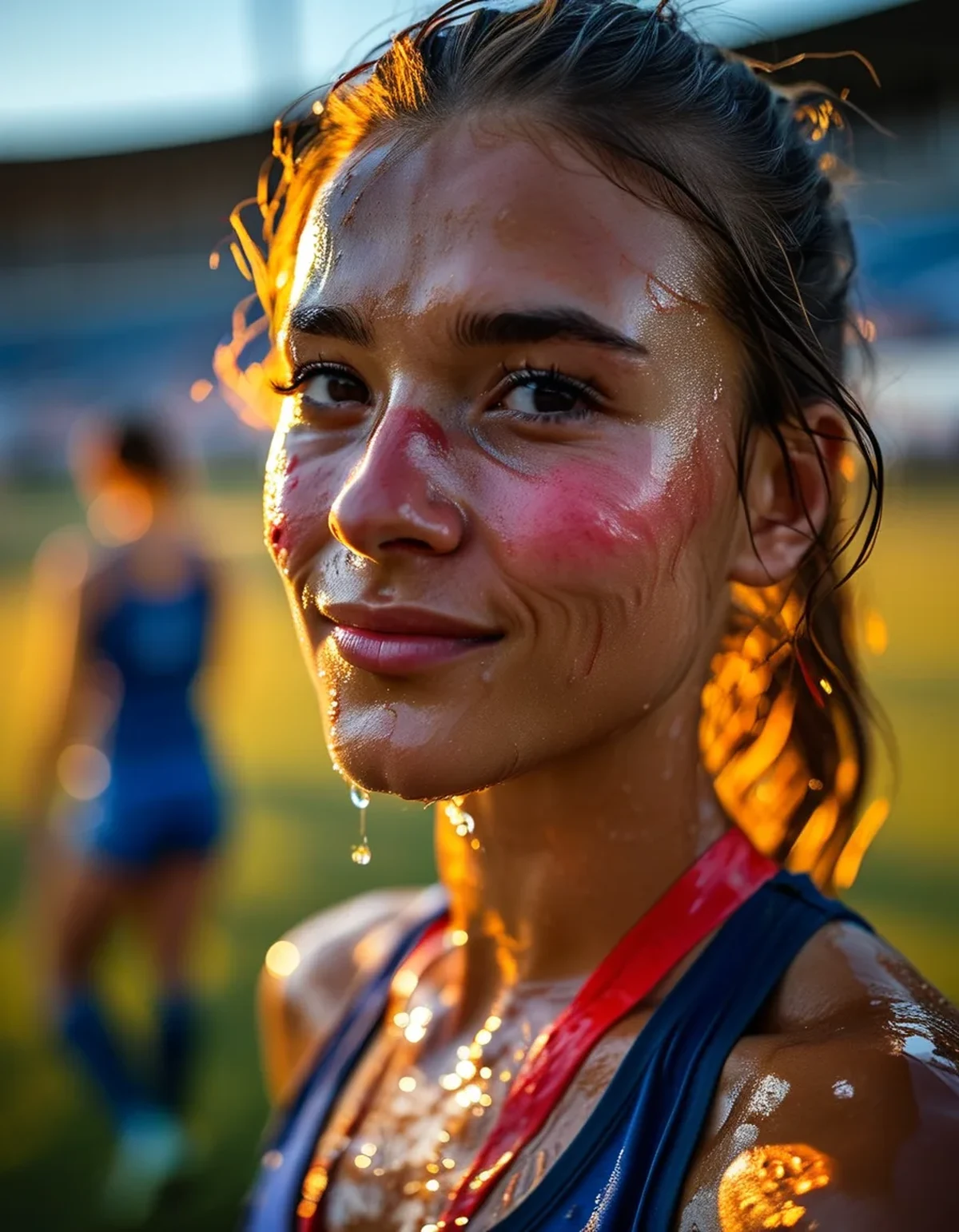
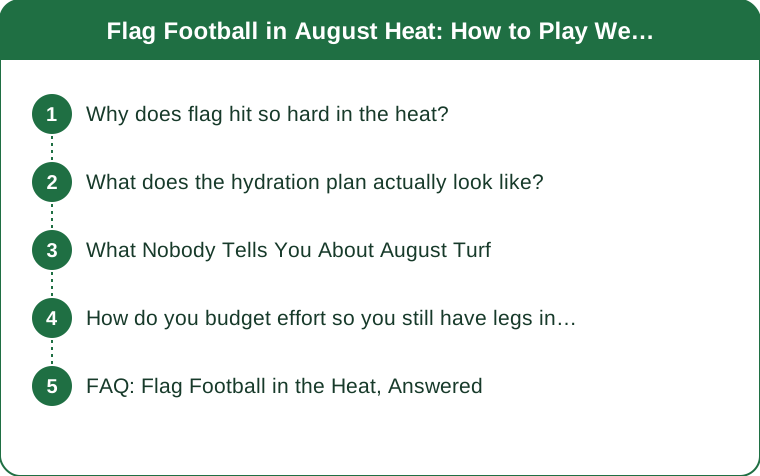
Why does flag hit so hard in the heat?
Because its effort pattern is a core-temperature machine.
Flag is repeated sprinting, which generates heat in spikes. A route at full speed, a chase to pull a flag, a scramble - each is a near-maximal burst producing a surge of internal heat, followed by a rest too short to shed it. Stack fifteen of those per half and core temperature ratchets upward step by step, which is a fundamentally harsher curve than the steady simmer of a jog.
Sweat cooling is already compromised in August air. High humidity slows evaporation, so the sweat pouring off you returns less cooling per drop. Your heart compensates by pushing more blood to the skin - while your legs are simultaneously demanding blood for sprints. That competition is why the same route feels two gears harder in week one of the season than it will in October.
The surface is fighting you too. Artificial turf runs dramatically hotter than air temperature - surface readings 20 to 40 degrees above ambient are routine in direct sun, and the rubber infill radiates stored heat well into the evening. Grass is kinder but still stores an afternoon of sun. An 88-degree 6pm kickoff on turf is played on a surface that spent the day banking heat like a griddle.
And the format hides the dose. Games feel casual - short plays, huddles, laughing between series - so the accumulating load registers late. Players who would respect a 5-mile run in this weather will play 90 minutes of repeated sprints and be surprised by the wall. The first skill of summer flag is simply believing the dose is real.
What does the hydration plan actually look like?
It starts the day before, because game-day sipping cannot fill a real deficit.
The day before: pre-hydrate with intent. Arrive at game day already topped up - steady water through the day, salted food at dinner, and an electrolyte drink in the evening if you sweated at work or training. The morning-urine check is the honest gauge: pale straw means ready; apple juice means you are starting the game behind, and behind is where cramps live.
Game day, before kickoff: roughly 16 to 20 ounces of fluid in the two hours before, finishing the last big drink about 30 minutes out so it absorbs rather than sloshes. Make part of it electrolyte mix - sodium is what August sweat takes fastest, and plain water alone dilutes what is left.
During the game: schedule, not thirst. Thirst lags badly during repeated sprints with adrenaline in the mix. The working rhythm is a few swallows every change of possession or every 10 to 15 minutes, alternating water and electrolyte drink. Small and frequent beats gulping at halftime - the stomach can only process so much at once, and a halftime flood mostly bounces.
The cooling moves that are not drinking: cold water on wrists, forearms, and the back of the neck between series drops perceived temperature fast - blood runs shallow there. A cooler with ice, two towels, and a spare bottle is the best equipment investment any team makes this month; the frozen water bottle that thaws into cold drink by the second half is the veteran trick.
Afterward: you will finish a liter or more down on a humid night. Electrolyte drink plus salted food within the hour, and note that recovery hydration tonight is pre-hydration for Thursday practice - in August the weeks chain together.
And know the red flags: dizziness, chills or goosebumps in the heat, confusion, or sweating that suddenly stops are past pushing-through - stop, shade, cool, and get help. No rec-league possession is worth heat illness. This is general information, not medical advice.
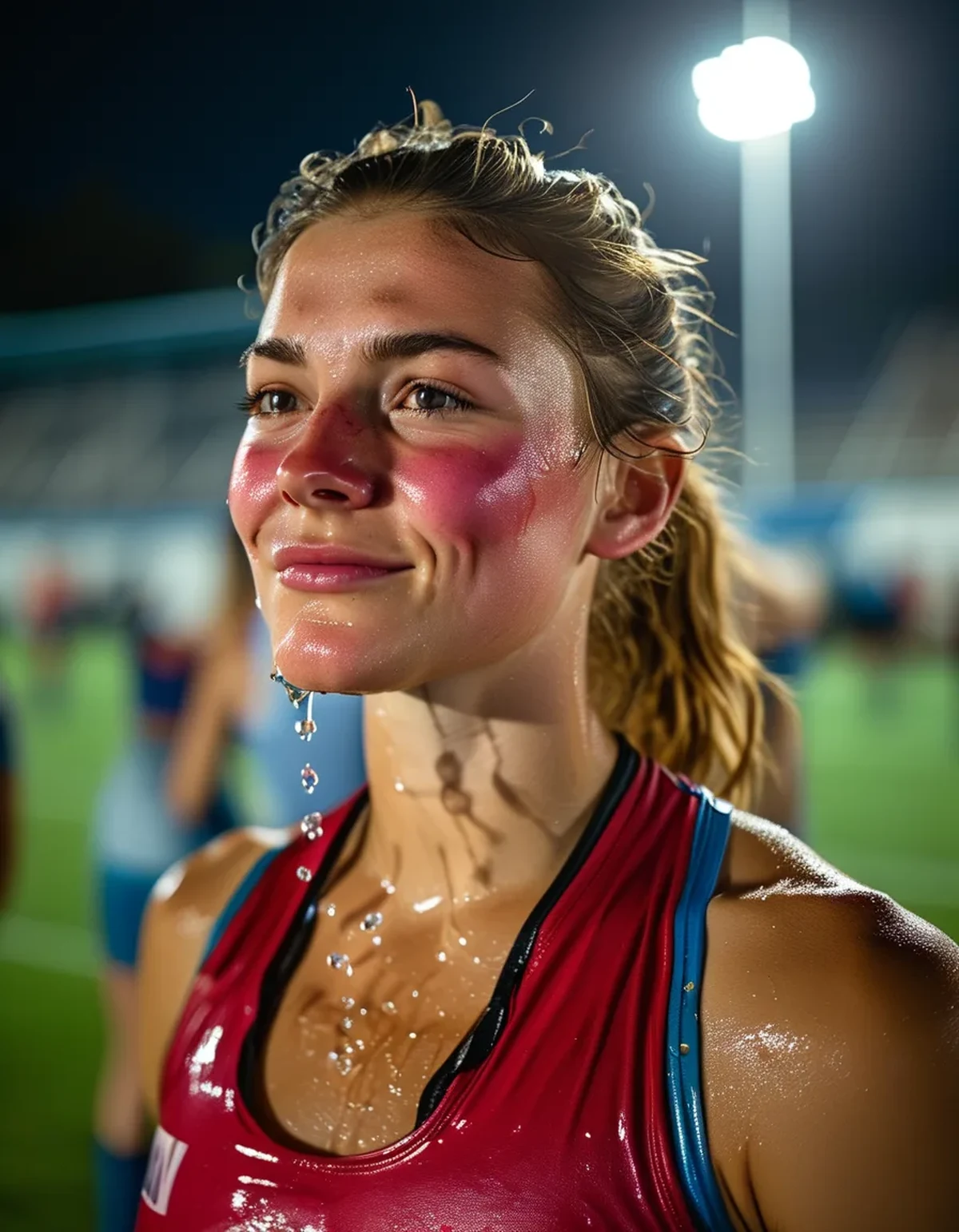
What Nobody Tells You About August Turf
The surface is the hottest thing on the field. Turf in sun reaches temperatures that are uncomfortable to touch - kneeling to stretch, sitting between games of a doubleheader, or diving for a flag all mean skin-on-griddle. The sideline tarp or a towel to stand and sit on is not a luxury item; watch who brings one and who is hopping.
Turf burns get worse in heat. Sweaty skin drags on hot turf instead of sliding, so incidental contact scrapes deeper. Fitted coverage on the contact zones - bike shorts or cropped leggings under game shorts - is the standard fix, and the same layer kills the inner-thigh chafe that 90 minutes of humid sprinting produces. Loose cotton tees, meanwhile, soak and cling by the second series; a light wicking top is cooler within ten minutes and all game after.
Cleat choice is a heat choice. Dark shoes on hot turf cook feet, and swollen August feet inside stiff cleats produce the black-toenail complaints of week one. Thin wicking socks, laces a notch looser than October, and unlacing between games of a doubleheader all help more than they sound like they would.
Evening games carry hidden heat. The 7pm kickoff feels like the answer, but dew point typically peaks in the evening, the turf is still radiating its banked afternoon, and windless dusk air is the day’s stillest. Evening is better than 2pm - it is not actually cool. Morning slots, where your league offers them, are the genuine bargain.
And the flags themselves get slippery. Sweaty hands plus a humid belt means more missed pulls in August than any other month - which changes the game subtly: pursuit angles matter more because the first swipe fails more often. Wiping hands on a dry towel each series is a real competitive edge that costs nothing.
How do you budget effort so you still have legs in the second half?
Like a battery you can see, because in this weather it is one.
Substitute before the fade, not after. The August mistake is playing until you feel done - by then core temperature is already high and recovery takes twice as long. The honest system: come off after every two or three hard series by plan, while you still feel good. Teams that rotate on schedule in week one out-execute deeper, prouder rosters in the fourth quarter every single time. If your squad runs thin, build rest into the game plan instead - more short passing series, fewer everybody-go deep calls in the first half.
Spend your sprints on purpose. Every player has a finite number of true 100-percent efforts in a hot game - maybe eight or ten before quality drops. Spend them on scoring plays and flag-saving chases, not on decorating a first-half blowout drive. Route depth can flex too: a crisp 10-yard option run at 90 percent beats a sloppy go route at 70.
Warm up shorter and shade earlier. The 20-minute full warm-up of October is a heat tax in August - muscles are already warm; what needs preparing is movement pattern, not temperature. Eight to ten minutes of dynamic work in the shade, strides at the end, done. Then stay out of the sun until the whistle; standing around on open turf pre-game is spending battery on nothing.
Talk about it as a team. Heat management fails silently when everyone individually decides to gut it out. The teams that handle August name it in the huddle: rotation plan, cooler assignments, and explicit permission to call for a sub. That last one matters most - in a culture where asking off looks weak, players hide fading until it costs a score or a hamstring.
And bank the acclimatization. Two weeks of regular exposure genuinely adapts you - earlier sweating, lower heart rate at the same pace. The week-one game that felt like survival becomes week three’s normal evening. August is the toll booth at the start of the season; it is not the season.
FAQ: Flag Football in the Heat, Answered
How do I get ready to play flag football in hot weather?
Start hydrating the day before - steady water, salted food, an electrolyte drink - so you arrive topped up, then take in 16 to 20 ounces in the two hours pre-game. Warm up short and shaded, plan substitutions in advance, and pack a cooler with ice, towels, and a frozen bottle. Arriving cool and already-hydrated matters more than anything you can do after kickoff.
What should I wear for flag football on hot turf?
A light wicking top over a supportive sports bra, with fitted bike shorts or cropped leggings under game shorts for turf-burn and chafe protection - hot turf scrapes sweaty skin badly. Thin wicking socks, slightly looser laces for swollen feet, and light-colored gear where possible. Cotton tees are the one clear mistake: soaked and clinging by the second series.
Are evening flag games safe from the heat?
Safer than afternoon, but not safe from it - humidity typically peaks in the evening, turf radiates the afternoon’s stored heat well past sunset, and dusk air is often the stillest of the day. Treat a 7pm August kickoff with the full plan: pre-hydration, scheduled drinking, honest rotation, and cooling breaks.
What are the warning signs of heat illness during a game?
Dizziness, confusion, chills or goosebumps in the heat, nausea, a sudden stop in sweating, or cramping that spreads - any of these means stop playing, get to shade, cool with water and ice, and seek help promptly rather than toughing it out. Heat illness escalates quickly. Cramps plus headache alone are your signal to end your own night early. This is general information, not medical advice.
TL;DR:
- Flag is repeated sprints - the exact effort pattern that spikes core temperature fastest, and August humidity blunts your cooling.
- Hydration starts the day before; game day runs on scheduled swallows and electrolytes, not thirst.
- Turf runs 20 to 40 degrees over air temperature and holds it into the evening - cover contact zones, bring a towel to stand on.
- Substitute on schedule before the fade, spend your true sprints on plays that matter, and say the plan out loud as a team.
- Two weeks of exposure buys real acclimatization - week one is the toll booth, not the season.
The fall league does not wait for fall. Manage the heat like part of the game plan, and week one is where you get ahead of every team that just showed up.
See It in Motion
Seen here: High Waist Yoga Leggings with Side Pockets — shop it on bubblelime.com
Keep Reading
This article is for general informational and styling purposes only. Fit, sizing, and product availability may vary.